
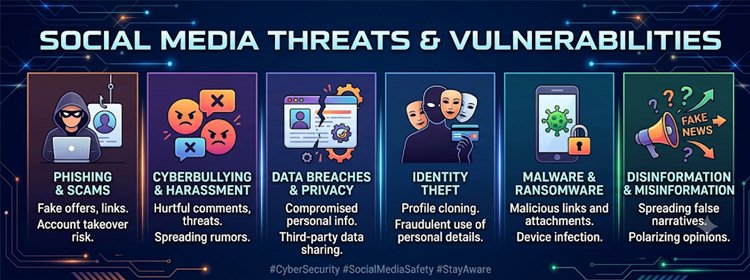
The main social media threats for students and parents include cyberbullying, privacy breaches, online predators, misinformation, addiction, and exposure to harmful content. These risks affect both young users and parents who may struggle to monitor or understand the digital environment.
Key Social Media Threats for Students and Parents
1. Cyberbullying & Harassment
• Students often face bullying, trolling, or harassment through platforms like Instagram, WhatsApp, or Snapchat. It can includes sending, posting, or sharing harmful, false, or mean content about someone.. It can also involve leaking private information, impersonation, or spreading rumors to cause humiliation
• This can lead to emotional distress, anxiety, and isolation.
• Parents may feel powerless or unaware of the extent of online harassment.
2. Privacy Breaches & Data Exploitation
Oversharing personal details (photos, location, school info) makes students vulnerable to identity theft or stalking (Stalking is a pattern of unwanted, repeated behavior—such as following, contacting, or monitoring someone—that causes fear, distress, or concern for their safety).
• Parents may unknowingly expose family data when posting about children online.
• Social media companies collect and monetize user data, raising long-term privacy concerns.
3. Online Predators & Grooming
Online Predators: Individuals who use the internet to exploit, manipulate, or harm others—often targeting children or vulnerable people.
• Behavior: They may pretend to be peers, offer gifts, friendly interactions or show excessive interest to build trust.
• Goal: Usually to gain control, exploit emotionally, financially, or sexually, or lure victims into unsafe situations.
• Parents may not recognize warning signs until harm has occurred.
Online Grooming: Grooming is the process predators use to build trust and gradually manipulate victims into harmful relationships.
Stages of Grooming:
1. Targeting: Identifying vulnerable individuals (lonely, seeking attention, oversharing online).
2. Friendship building: Pretending to be supportive, kind, or similar in age/interests.
3. Trust development: Sharing secrets, offering gifts, or making the victim feel “special.”
4. Isolation: Encouraging secrecy, discouraging victims from talking to parents or friends.
5. Exploitation: Introducing harmful content, pressuring for explicit photos, or arranging in-person meetings.
6. Control: Threatening exposure or using guilt to maintain dominance.
Why It’s Dangerous
• Students: May not recognize manipulation until it’s too late.
• Parents: Often unaware of subtle signs, especially if predators use hidden accounts or encrypted apps.
• Long-term harm: Emotional trauma, exploitation, and in severe cases, criminal abuse.
Warning Signs
• A child suddenly becomes secretive about online activity.
• Excessive time spent chatting with “new friends” online.
• Receiving unexplained gifts or money.
• Withdrawal from family or friends.
• Reluctance to share who they’re talking to online.
4. Misinformation & Fake News
• Students can be misled by false information about health, politics, or social issues.
• Parents may also fall victim to scams or misleading parenting advice shared online.
• This erodes trust and can influence harmful decisions.
5. Addiction & Mental Health Impact
• Excessive screen time leads to sleep disruption, reduced academic performance, and social withdrawal.
• Parents may struggle to set boundaries, especially when children resist restrictions.
• Dopamine-driven design of apps encourages compulsive use.
6. Exposure to Harmful Content
• Students may encounter violent, sexual, or extremist material.
• Algorithms can amplify harmful trends (e.g., dangerous challenges).
• Parents often lack tools to filter or monitor effectively.
Copyright 2024, All Rights Reserved | Web Designed by Spiderline